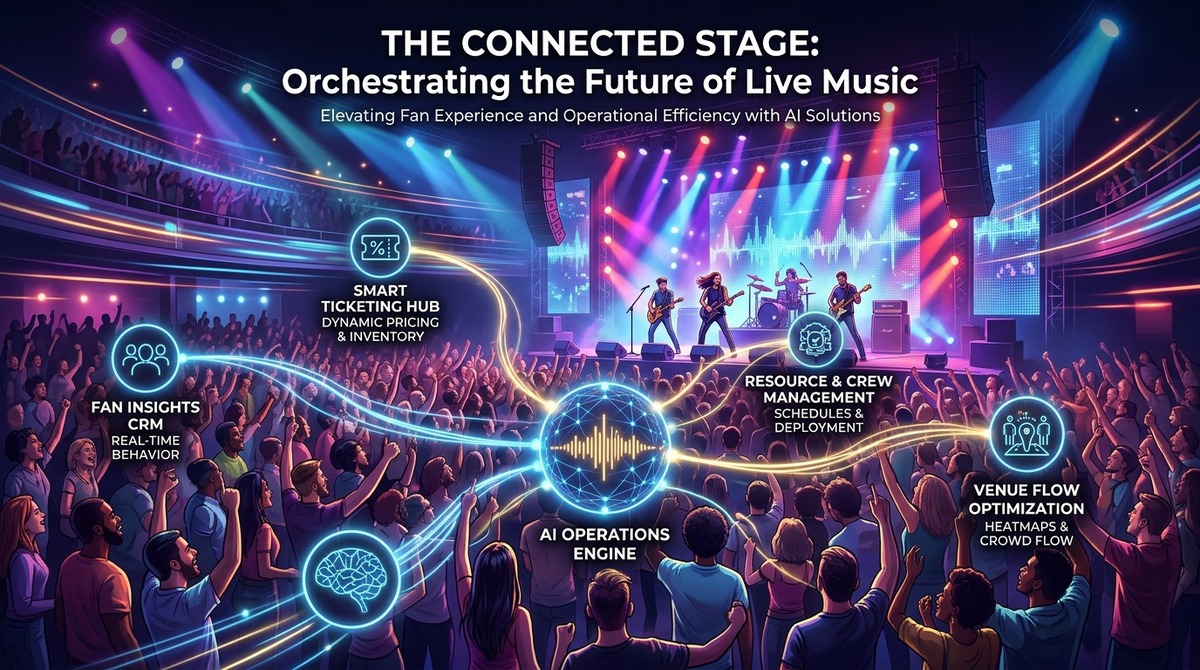
The relationship between a music venue and its audience is defined by raw energy, sound, and a shared, ephemeral experience. Behind every unforgettable performance, however, is a complex operational symphony. Managing thousands of fans, multiple points of sale, dynamic ticketing inventory, and sophisticated production schedules is a monumental, round-the-clock challenge.
Yet, despite the high-tech production on stage, many venues operate on fragmented back-of-house infrastructure. Disconnected systems for ticketing, concessions, marketing, and security often create operational bottlenecks, data silos, and friction points for the very fans they aim to serve. To thrive in the modern entertainment economy, venues must bridge the gap between their systems of record and live operations.
The core bottleneck in modern venue management isn't a lack of tools; it's a lack of connection. Over time, venues have adopted standalone point solutions for specific needs:
A separate platform for web ticketing.
An independent system for concessions and merch (POS).
A disconnected email marketing tool.
Isolated security and entry monitoring apps.
When these systems operate in silos, venue managers cannot gain a real-time, comprehensive view of the guest experience or operational flow. For example, marketing teams cannot automatically trigger targeted offers based on real-time concession behavior. Security cannot efficiently map crowd density against entry flow. Every disconnect forces manual staff intervention, increasing the chance of errors and response delays.
The solution lies in moving beyond isolated tools and embracing a unified intelligence layer that connects every facet of venue operations. By deploying robust AI Solutions for Music Venues, operators can synchronize their CRM, ticketing, POS, and security systems into a single, cohesive engine.
When intelligence is connected:
End-to-End First-Contact Resolution: Automated agents can handle fan inquiries end-to-end, around the clock. They retrieve real-time data across ticketing, concessions, and seating charts, allowing them to resolve issues, process upgrades, or answer complex questions immediately, on the first try, and automatically update the record.
Proactive Operational Flow: Integrated systems leverage real-time data to anticipate needs. Security can monitor crowd flow and dynamically deploy resources based on entry velocity, preventing bottlenecks before they form. Concession stands can optimize inventory distribution across the venue based on live sales patterns.
Hyper-Personalized Fan Engagement: Disconnected marketing lists are replaced by synchronized guest profiles. Venues can execute automated, targeted campaigns (like personalized dynamic offers or artist win-back messaging) based on rich transactional and behavioral data, strengthening fan loyalty and driving revenue.
Operational transformation does not happen overnight, and it doesn't require ripping and replacing core infrastructure. Venues should begin with a strategic audit to identify their primary workflow bottlenecks. Mapping where data lives and which workflows involve heavy manual interaction—such as processing bulk ticket dynamic adjustments, managing multi-system marketing lists, or coordinating pre-visit intake—provides a clear baseline. This measured approach ensures that every integration directly addresses a business need and delivers measurable ROI.
The future of live entertainment belongs to venues that can match the raw energy on stage with seamless operational execution behind it. By solving the connection challenge, venues can transform their technology from a series of admin hurdles into a strategic asset that orchestrates an elevated experience for artists, staff, and fans alike.

This post has been authored and published by one of our premium contributors, who are experts in their fields. They bring high-quality, well-researched content that adds significant value to our platform.









Why Entertain Me brings readers the latest entertainment news, celebrity updates, lifestyle trends, and informative stories from around the world.