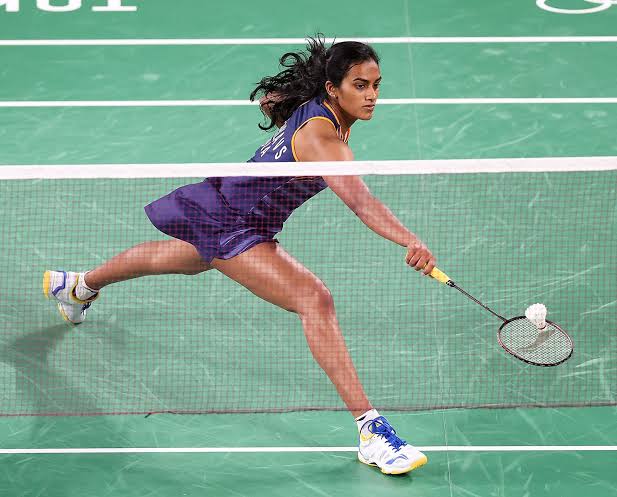
Most people first pick up a badminton racket at a family function or in a park, and they manage a few friendly hits within minutes. Then they step onto a real court, try to return a fast serve, and realise the game is much quicker than it looked. That gap is why so many new players ask how long it really takes to play a proper match.
The honest answer: you can learn badminton in 6 weeks if "learn" means a sound grip, steady footwork, a legal serve and the basic shots, practised two or three times a week. Real mastery takes far longer. This plan shows exactly what to work on each week. It pairs well with the Badminton Guide for Beginners on Kheloexch, which covers court sizes, rules, rackets and shuttles in detail.
It depends on how often you play and whether anyone is correcting you. Coaching sources give timelines that line up roughly like this:
| What you want to achieve | Typical time | Assumes |
|---|---|---|
| Correct grip, serve and basic strokes | 4–6 weeks | 2–3 sessions a week |
| Comfortable, controlled rallies | 2–5 months | Regular lessons with a coach |
| The same level without coaching | 7 months to a year or more | Self-taught |
| Club or competitive standard | Several years | Structured training |
The biggest variable is feedback. A beginner who practises a wrong grip three times a week simply gets better at the wrong grip. A coach, a club session or even filming yourself on a phone speeds things up because it catches mistakes before they become habits.
Set the right goal and six weeks feels like progress instead of failure. By the end of this plan, a committed beginner should be able to:
A deceptive smash or a strong backhand clear will not be there yet. Those come later, and they come faster when the basics are solid.
Keep the kit simple. A light racket with an even or head-light balance is easier on the wrist and quicker to swing. Synthetic shuttles last longer than feather ones and suit practice well.
Spend your money on shoes before an expensive racket. Badminton is full of sudden sideways stops, and non-marking court shoes with side support protect your ankles far better than running shoes, which are built for forward movement. For specific racket weights and shoe picks, the gear sections on Kheloexch break down the options.
Plan three sessions a week of about 60 minutes each. If you can only manage two, stretch the plan to eight weeks rather than skipping steps.
Each week builds on the one before. Start every session with a 10-minute warm-up of light jogging, arm circles, lunges and side shuffles, and finish with five minutes of stretching.
Most beginners hold the racket like a hammer. Hold it like a handshake instead, with the thumb and index finger forming a loose V and the fingers doing the work. For the backhand grip, turn the racket slightly and press your thumb flat against the wide back of the handle.
Good players win rallies with their legs. Learn the base position near the centre of the court, a small split step as your opponent hits, and the habit of returning to base after every shot.
Every rally starts with a serve, so early practice pays off quickly. Learn the low serve, which drops just past the short service line 1.98 m from the net, and the high serve, which goes deep to the back of the court and is used mostly in singles. Under the current Laws, the whole shuttle must be below 1.15 m from the floor when you strike it.
The overhead clear pushes your opponent to the back of the court. The drop shot uses the same preparation but lands softly near the net. Learning them together teaches disguise from the start. Turn side-on, point your free hand at the shuttle and hit at the highest comfortable point.
Net shots are soft touches that tumble just over the tape. Drives are flat, fast shots hit around shoulder height. The smash comes last because it relies on the timing and footwork you have already built. Aim for a steep, controlled angle rather than raw power.
Now put it all together. Play short games, keep score yourself and notice where you stand after each point. Doubles is easier on fitness and more social, while singles teaches you to cover the whole court.
Badminton uses rally-point scoring, so every rally earns a point no matter who served. Right now a game goes to 21 points. From 20-all a side needs a two-point lead, and at 29-all the next point wins. A match is the best of three games. In singles, you serve from the right service court on an even score and from the left on an odd score.
That format is about to change. In April 2026, Badminton World Federation members voted to adopt a 3×15 system that takes effect on 4 January 2027. Games will go to 15 points instead of 21, with a tied game allowed to run up to a cap of 21. Rally-point scoring stays the same, and many clubs may keep playing to 21 for a while, so it helps to know both.
You can follow this plan alone with a practice partner, but structured help shortens the curve. The BWF's own Shuttle Time schools programme starts complete beginners with 10 Starter Lessons, and Badminton Wales built a six-week Couch to Court course for adult newcomers. Both suggest that six weeks is a sensible block for the fundamentals.
In India, academy group batches usually take 8 to 15 players and meet five or six days a week for 60 to 90 minutes. Monthly fees commonly range from about ₹1,500 to ₹6,000, depending on the academy, court quality and batch level. Even a single month in a batch, combined with this plan, fixes habits before they set.
Six weeks won't turn you into a tournament player, but it is enough to build the foundations many casual players never learn properly: a relaxed grip, footwork that brings you back to the centre, a legal serve and the core shots. Treat each weekly checkpoint as a gate rather than a deadline. If you miss one, repeat that week instead of rushing ahead. After week six, keep playing two or three times a week and seek out games against slightly stronger players. That is usually where the next big jump in your game comes from.

This post has been authored and published by one of our premium contributors, who are experts in their fields. They bring high-quality, well-researched content that adds significant value to our platform.












Why Entertain Me brings readers the latest entertainment news, celebrity updates, lifestyle trends, and informative stories from around the world.